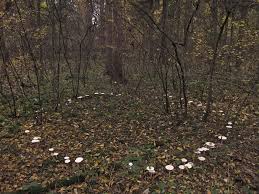
You have probably come across one of these as you walked through woodland somewhere.
You will have smiled at the strangeness of those mushrooms growing in a ring shape, as though avoiding the centre for some reason. Of course there is a perfectly logical, scientific explanation, but the fantasy is so much more interesting.
Fairy rings, as they have long been called, have occupied a popular place in folklore for thousands of years.
While science would call them naturally occurring rings of mushrooms, folklore tells us that these strange formations are actually the work of supernatural beings.
They are portals to other worlds or strange remnants of dancing faery folk. Of course, those are just stories, right?
Don’t ever step into a fairy ring
Fairy rings have other names: Elf Circles, Sorcerers or Witches Rings. The folklore surrounding these strange circles can be found in many cultures, each with slightly different variations.
For example, in German folklore, these rings are thought to be spots where witches dance on Walpurgis Night, a spring festival that lies exactly six months from All Hallows’ Eve.
In Celtic folklore, on the other hand, fairy rings are said to be caused by dancing faeries, or burned into the ground by dancing elves and left to appear in the morning after a moonlit night.
Whatever the case, it is said you should never enter a fairy ring, or else you will be cursed by their otherworldly protectors. You may even find yourself whisked away into the fairyland, or perhaps even driven mad.
Myths tell of mortal people entering fairy rings and suffering for it. Some believe that anyone stepping into an empty fairy ring will die young.Those violating fairy perimeters become invisible to those outside and may be unable to leave the circle.The fairies force intruders to dance till exhausted, dead, or in the throes of madness.
The only safe way, according to some beliefs, to investigate a fairy ring is to run around it nine times only (a tenth lap would nullify the effect). Doing this allows the runner to hear the fairies dancing underground. It must be done under a full moon, and in the direction the sun travels during the day.
It is also said that wearing a hat backwards confuses the fairies and stops them from doing the wearer any harm.
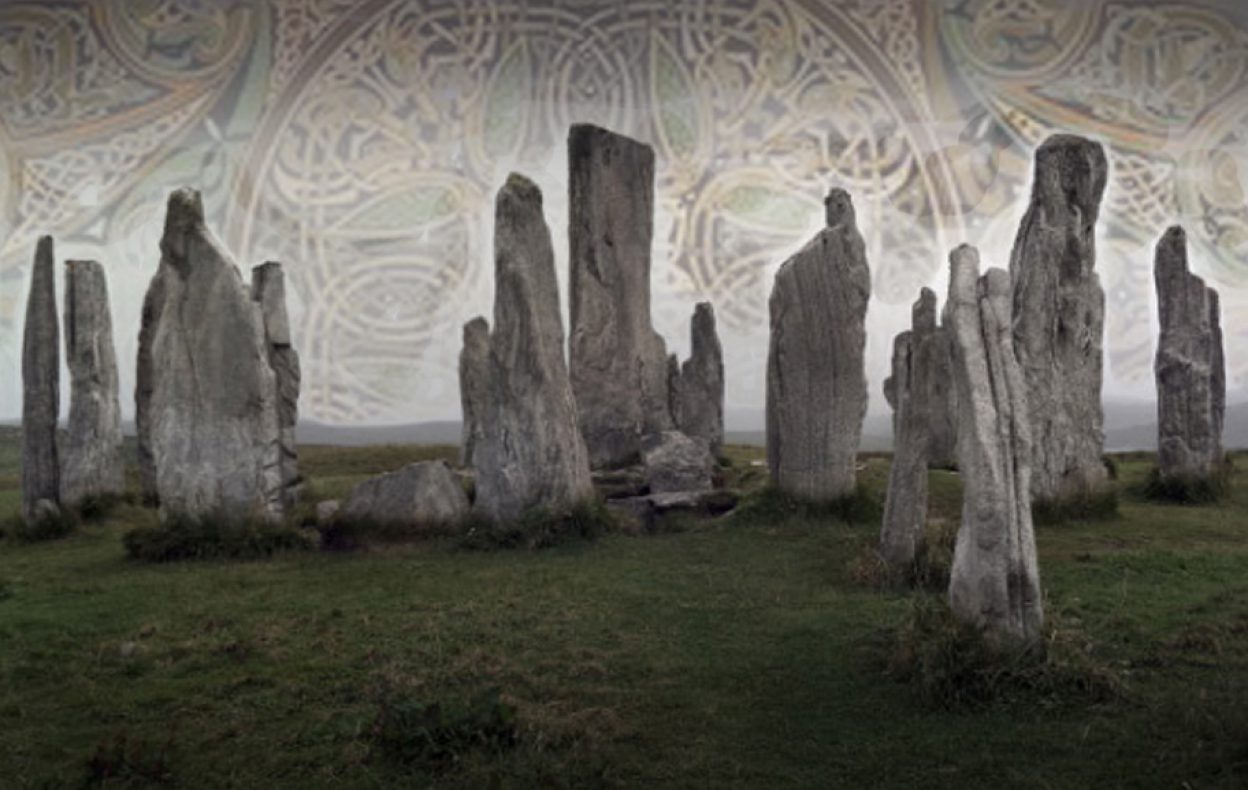
There are many sites in the UK where fairies are believed to be regular visitors, though always apparently at full moon. For example, “The Pixies’ Church” is a rock formation in Dartmoor surrounded by a fairy ring; and a stone circle at Cader Idris in Wales that is believed to be a popular spot for fairy dances.
A Devon legend says that a black hen and chickens sometimes appear at dusk in a large fairy ring on the edge of Dartmoor.
Victorian society believed that fairies, elves and witches were closely associated with one another, and malevolent towards humans. In Scotland is said that the mushrooms were used as seats and tables for dining by the magical beings, while in Welsh is claimed that the fungi were used as umbrellas.
Twenty-first century beliefs in parts of the UK still hold firm to stories of fairy activity, and many think of them as omens of good fortune. Despite of those who associated them with ill luck, some legends see fairy circles as places of fertility and fortune. Welsh folk believe that mountain sheep eating fairy grass flourish, and crops sown around them do far better than those planted elsewhere.
Fairy rings also occupy a prominent place in European folklore as the location gateways into elfin kingdoms, or places where elves gather and dance. They are called “Sorcerers’ Rings” in France, and “Witches’ Rings” in Germany, where folk believe they are most active on “Walpurgisnacht”, Halloween to us. According to stories, a fairy rings appear when a fairy, pixie, witch or elf is near.
The Dutch believe that the empty centre of the fairy ring occurs because the devil puts milk-churn there. Austrian folklore has it that fairy rings are created by flying dragons, and once created, nothing but toadstools could grow there for seven years. French belief is that fairy rings are guarded by giant toads that curse any violating the circles.
Elsewhere in Europe, entering a fairy ring could cost the intruder an eye. This can be alleviated where rabbits are abundant, because they crop the grass short but leave the toadstools alone. Their droppings are rich in Nitrogen, so over time they will replenish what earlier plant grow had taken out of the soil. In time a secondary circle of mushrooms could appear in the centre of the original circle, creating an unusual “double ring”, witch folklore has it it is especially magical.
 OGHAMGIFTS
One thought on “Fairy Rings: Myth and Nature”