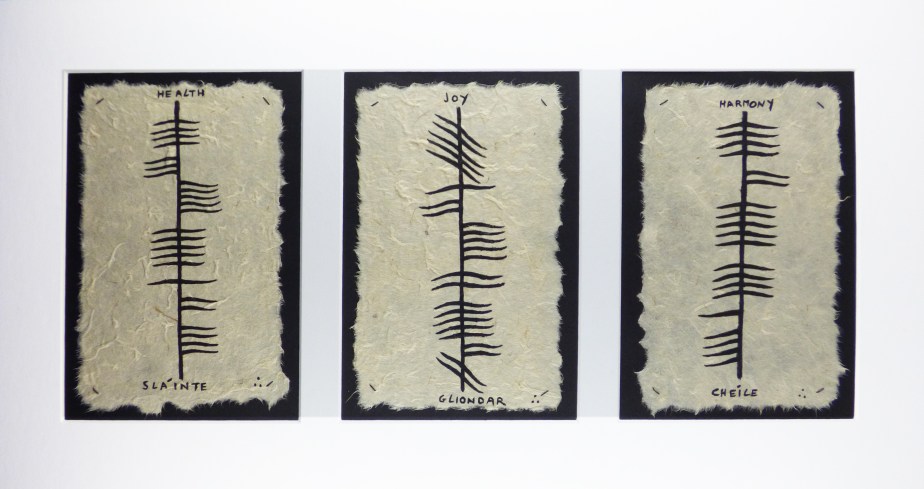
Ogham is an Early Medieval alphabet used primarily to write the early Irish language (in the so-called “orthodox” inscriptions, 4th to 6th centuries), and later the Old Irish language (so-called scholastic ogham, 6th to 9th centuries).
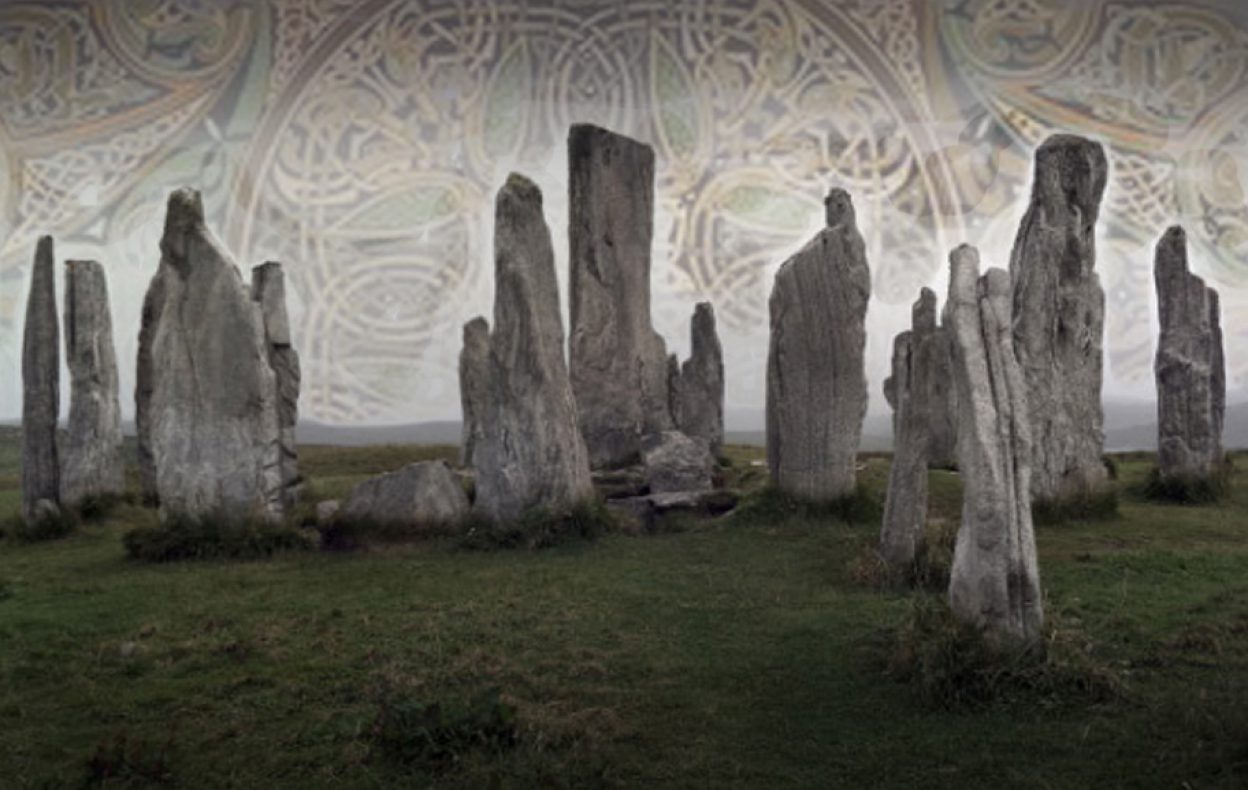
There are roughly 400 surviving orthodox inscriptions on stone monuments throughout Ireland and western Britain; south of Ireland, in Counties Kerry, Cork and Waterford.
A rare example of a Christianized Ogham stone can be seen in St Mary’s Collegiate Church Gowran Co. Kilkenny. The largest number outside of Ireland is in Pembrokeshire in Wales. The vast majority of the inscriptions consist of personal names.
Ogham is sometimes called the “Celtic Tree Alphabet”, based on a high medieval Briatharogam tradition ascribing names of trees to the individual letters. The etymology of the word ogam or ogham remains unclear. One possible origin is from the Irish og-úaim ‘point-seam’, referring to the seam made by the point of a sharp weapon.
 OGHAMGIFTS